You’re heading out for your morning commute through Vancouver’s busy streets when your garage door suddenly decides to play tricks on you. It closes most of the way down, touches the ground, and then immediately shoots back up like it’s been startled.
This frustrating behavior isn’t your door being stubborn; it’s responding to sophisticated safety mechanisms designed to prevent accidents and damage. Your door’s safety reversal system acts like a vigilant guardian, constantly monitoring for potential hazards.
In this guide, Ryder Garage Doors will explain why your garage door reverses before hitting the floor. If you need a garage door repair to address the issue, call us now.
Common Causes of Premature Garage Door Reversal
If your garage door reverses before hitting the floor, you’re dealing with a safety feature that’s working overtime to protect you and your property. This issue often stems from sensor misalignment, environmental factors, or mechanical wear. Below are the most common causes that may lead your door to reverse before it fully closes.
1. Misaligned or Dirty Sensors
Sensors must be perfectly aligned to communicate appropriately. Even a minor shift caused by a ball, garden tool, or gust of wind can disrupt their connection and trigger a reversal. Dirt, spider webs, rain, or condensation can obscure the sensor beam, causing the door to reverse due to an assumed safety risk.
2. Overly Sensitive Force Settings
Garage door openers are calibrated to detect resistance. If the force settings are too low, normal pressure from debris, weather stripping, or the door’s weight may cause an obstruction detection. The travel limits must also be set properly to prevent the floor from triggering a reversal.
3. Worn Weather Stripping
Old or stiff weather stripping at the bottom of the door can increase resistance during closing, which may confuse the force sensors and prompt the system to reverse.
4. Track Problems
Leaves, ice, or small objects in the door tracks can cause minor resistance, enough to activate the safety system. Even a slight misalignment in the door tracks can cause friction that disrupts the regular operation and activates the reversal feature.
5. Worn or Damaged Springs or Rollers
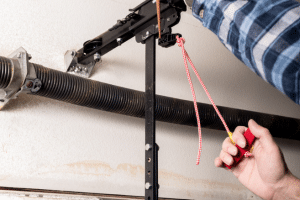
Springs that are weak or broken can cause the door to move unevenly or unpredictably, triggering the force sensors to reverse the door’s movement. Similarly, if the rollers are worn out or bent, the door may bind or stick in the tracks, resulting in excess friction and potentially causing the door to reverse.
Initial Troubleshooting Techniques
Before seeking professional help, consider taking several simple steps to diagnose and resolve the issue. Start by visually inspecting the entire door system for obvious problems. Look for any objects blocking the door’s path or interfering with the garage door sensor’s beam.
If your garage door reverses before hitting the floor, check your system sensors first, as they are the most common cause of the issue. Make sure they’re facing each other directly and that their indicator lights are glowing steadily. Clean the sensor lenses with a soft cloth to remove any dirt, spider webs, or moisture that might be interfering with the beam.
Examine the weather stripping at the bottom of your door for damage or excessive stiffness. Sometimes, replacing this rubber barrier can solve the problem. Also, check the door tracks for debris, ice, or small objects that might be creating resistance.
When To Call Garage Door Experts
While some garage door issues make for perfect weekend projects, others require professional expertise to be resolved safely and effectively. Sensor alignment may seem simple, but achieving the precise positioning necessary for reliable operation often necessitates professional tools and expertise. Force-setting adjustments involve working with high-tension components that can be dangerous without proper knowledge.
Professional technicians have the specialized tools and expertise to calibrate your door’s safety systems properly. They can also identify underlying mechanical issues that might not be obvious to homeowners. Working with garage doors involves high-tension springs and heavy components that can cause serious injury if not handled properly.
Get Expert Solutions From Ryder Garage Doors
At Ryder Garage Doors, we understand how frustrating it can be when your garage door reverses before hitting the floor, especially during Vancouver’s unpredictable weather. Our experienced technicians can quickly diagnose and repair these issues, ensuring your door operates safely and reliably. We recommend regular maintenance to prevent these problems from developing in the first place.
Contact Ryder Garage Doors today if your garage door reverses before hitting the floor. Call us at (360) 585-8071 for professional diagnosis and repair services that will get your door working correctly again.